What Does “Two Stages” Mean for Hemp Enforcement?
“Two stages” is a shorthand some people use to describe the approaching changes to federal hemp rules and the way businesses may prepare for them. It can be useful—but it can also make the timeline sound more settled or simpler than it is. The key points are the change toward measuring total THC, the inclusion of THCA, and a much tighter per-container THC limit.
Ask yourself this: for businesses and consumers, the dates matter: nov 12 stage 1 and dec 11 stage 2 are often discussed as separate checkpoints. But they should not be treated as two universally confirmed federal compliance deadlines without checking the law and any current agency guidance. The safest approach is to verify the exact rule, effective date, and enforcement instructions that apply to the product and location in question.
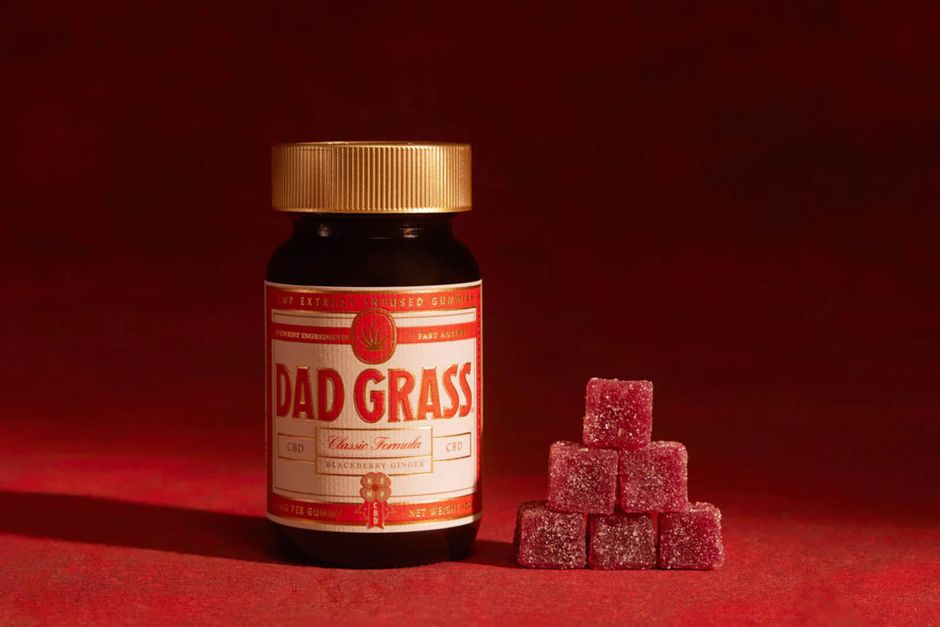
This article explains the central hemp status changes in plain language, including how to use third-party lab testing and a certificate of analysis (COA) to evaluate products. It is educational information, not legal advice.
Why “Two Stages” Can Be Confusing
The phrase may refer to two different things: a legal change taking effect and a later enforcement or compliance checkpoint. Those are not automatically the same. A statute can set an effective date, while agencies, states, retailers, and manufacturers may separately communicate how they plan to transition products, labels, testing, and inventory.
So when someone says “stage 1” or “stage 2,” ask what document they mean. Is it a federal law, an agency announcement, a state rule, or a company’s internal deadline? Unless an authoritative source establishes both dates, the labels are best understood as a planning shorthand—not as proof that federal law creates two distinct phases.
Term Practical meaning What to verify Nov 12 stage 1 A commonly cited first checkpoint for hemp status changes The actual legal provision, effective date, and applicable agency guidance Dec 11 stage 2 A later date sometimes described as a second compliance or enforcement checkpoint Whether a law or agency has formally established it, and what it applies toDates should be checked against the current text of the relevant public law and official agency materials before a business changes labels, pulls products, or tells customers that a product is—or is not—legal.
The Big Measurement Change: Total THC
A major source of confusion in hemp testing is the difference between delta-9 THC and total THC. Hemp products can contain THCA, the acidic form of THC found in raw plant material. THCA may convert into delta-9 THC when heated. A test that reports only delta-9 THC can therefore leave out an important part of the product’s potential THC content.
When a rule uses “total THC,” the calculation generally accounts for delta-9 THC and the amount of THC that may result from THCA conversion. A commonly used formula is:
Total THC = delta-9 THC + (THCA × 0.877)

The 0.877 factor accounts for the mass lost when THCA loses carbon dioxide as it converts into delta-9 THC. It is a conversion factor—not a discount that makes THCA disappear from the calculation.
A quick math example
Suppose a lab report lists 0.10 mg of delta-9 THC and 1.00 mg of THCA in a serving. The converted THCA amount is:
1.00 mg THCA × 0.877 = 0.877 mg
Add the delta-9 THC:
0.10 mg + 0.877 mg = 0.977 mg total THC per serving
That is why looking only at a “delta-9 THC” line can give an incomplete picture. Staff and shoppers should check whether the COA reports THCA and whether the total THC calculation is provided or can be worked out from the listed results.
Why a Per-Container Cap Is Stricter
A limit measured per container is different from a limit measured per serving. A product might appear to meet a low per-serving threshold while the full package contains much more THC because it has many servings. A per-container cap looks at the amount in the whole package.
For example, if a hypothetical rule sets a cap of 0.4 mg total THC per container, a package with ten servings cannot be assessed by saying each serving contains only 0.1 mg. Ten servings at 0.1 mg each add up to 1.0 mg per container—more than the hypothetical cap.
Example package THC per serving Servings Total per container Compared with 0.4 mg cap Small package 0.1 mg 4 0.4 mg At the cap Larger package 0.1 mg 10 1.0 mg Above the capThis per-container approach can be much stricter than a per-serving standard. It can affect product formulation, package size, serving counts, and how brands explain test results. Always confirm the actual limit and how the governing rule defines a full spectrum THC content “container”; the example above illustrates the math, not a complete statement of every legal requirement.
What Nov 12 Stage 1 and Dec 11 Stage 2 Might Mean
In discussions about nov 12 stage 1, people may be referring to the point when a statutory hemp definition or related federal requirements are expected to change. That makes Nov 12 a date worth monitoring, but the exact effect depends on the controlling legal text, its effective-date language, and any subsequent amendments or official interpretation.
Dec 11 stage 2 is sometimes described as a follow-up point for enforcement or implementation. Do not assume, however, that this date automatically gives every business a grace period, that all products are treated the same way, or that enforcement cannot happen before then. A later date may come from a particular agency communication, state policy, or industry interpretation rather than from the federal statute itself.
For a business, the practical takeaway is to plan around both dates while verifying what each one actually represents:
- Identify the source. Find the public law, regulation, agency notice, or state rule that names the date.
- Read the scope. Check which products, actors, and conduct are covered.
- Confirm the date language. An effective date, a compliance deadline, and an enforcement priority are different things.
- Recheck close to the date. Laws and agency guidance can change; use current official materials rather than an old blog or sales sheet.
How COAs Help—and What They Cannot Prove
A certificate of analysis is a lab report for a particular sample or batch. A useful COA should be traceable to the product being sold, identify the tested sample, show the testing date, and report relevant cannabinoids. Third-party lab testing can help confirm what was measured, but a COA is not a blanket legal guarantee and does not establish that every batch has the same results.
When reviewing a COA, look for:
- Batch matching: The batch or lot number should match the product package.
- Recent testing: Check that the report is not being reused for a newer batch.
- THCA results: A report showing delta-9 only may not answer a total-THC question.
- Units and serving math: Distinguish milligrams per gram, per serving, and per container.
- Laboratory details: Confirm the lab and report are identifiable and that the results are not merely a marketing graphic.
Be cautious with phrases like “THC-free.” That phrase can be confusing unless the brand explains what it means and supports it with a current, batch-specific COA showing the relevant analytes and detection limits. “Not detected” is not necessarily the same as absolute zero. Likewise, a product labeled “hemp-derived” is not automatically lawful in every state or under every federal provision.
What Retailers and Shoppers Can Do Now
Retailers should prepare for the hemp status changes by organizing current COAs, checking package-level calculations, and training staff to explain the difference between delta-9 THC and total THC. A QR-code COA binder can make it easier to connect a shelf product to the correct batch report—provided the code points to the current hemp gummies legal limit report and not a generic lab page.
Brands should review formulations and packaging using both per-serving and per-container math. If a product has 0.08 mg total THC per serving and contains eight servings, the package total is 0.64 mg. Small numbers on a serving panel can add up across the container.
Companies such as Joy Organics may be part of a shopper’s research, but consumers should evaluate any brand’s specific product using its current label and batch-specific COA rather than relying on a brand name or a general claim. The same standard applies across the industry: verify the product in hand.
Bottom Line
“Two stages” is a useful phrase for planning, but it is not a substitute for checking the legal source. The central changes to watch are a move toward total THC calculations, inclusion of THCA using the 0.877 conversion factor, and a potentially much stricter per-container THC cap. Pretty simple.. The difference between 0.1 mg per serving and 0.4 mg per container can decide whether a package is within a stated limit—or not.
Treat Nov 12 stage 1 and Dec 11 stage 2 as dates to verify, not assumptions to repeat. Check the current public law and official guidance, review the whole-package math, and use a current third-party lab report and COA for the exact batch. That is the clearest way to understand hemp status changes without overpromising what a label or lab result means.